Seneca: Life, Stoic Philosophy, Famous Quotes & Timeless Lessons
Seneca remains one of the most influential philosophers in history. More than two thousand years after his death, people still read his writings for guidance on success, hardship, time, and personal growth. His ideas form a major part of Stoicism, a philosophy that teaches self-control, wisdom, and resilience.
Unlike many thinkers of the ancient world, Seneca did not live a quiet life. He experienced wealth, political power, exile, and eventually a tragic death. These experiences shaped his philosophy and made his teachings practical rather than theoretical.
Today, entpreneursre, leaders, students, and everyday readers continue to learn from Seneca because his advice applies just as much to modern life as it did to ancient Rome.
Who Was Seneca?
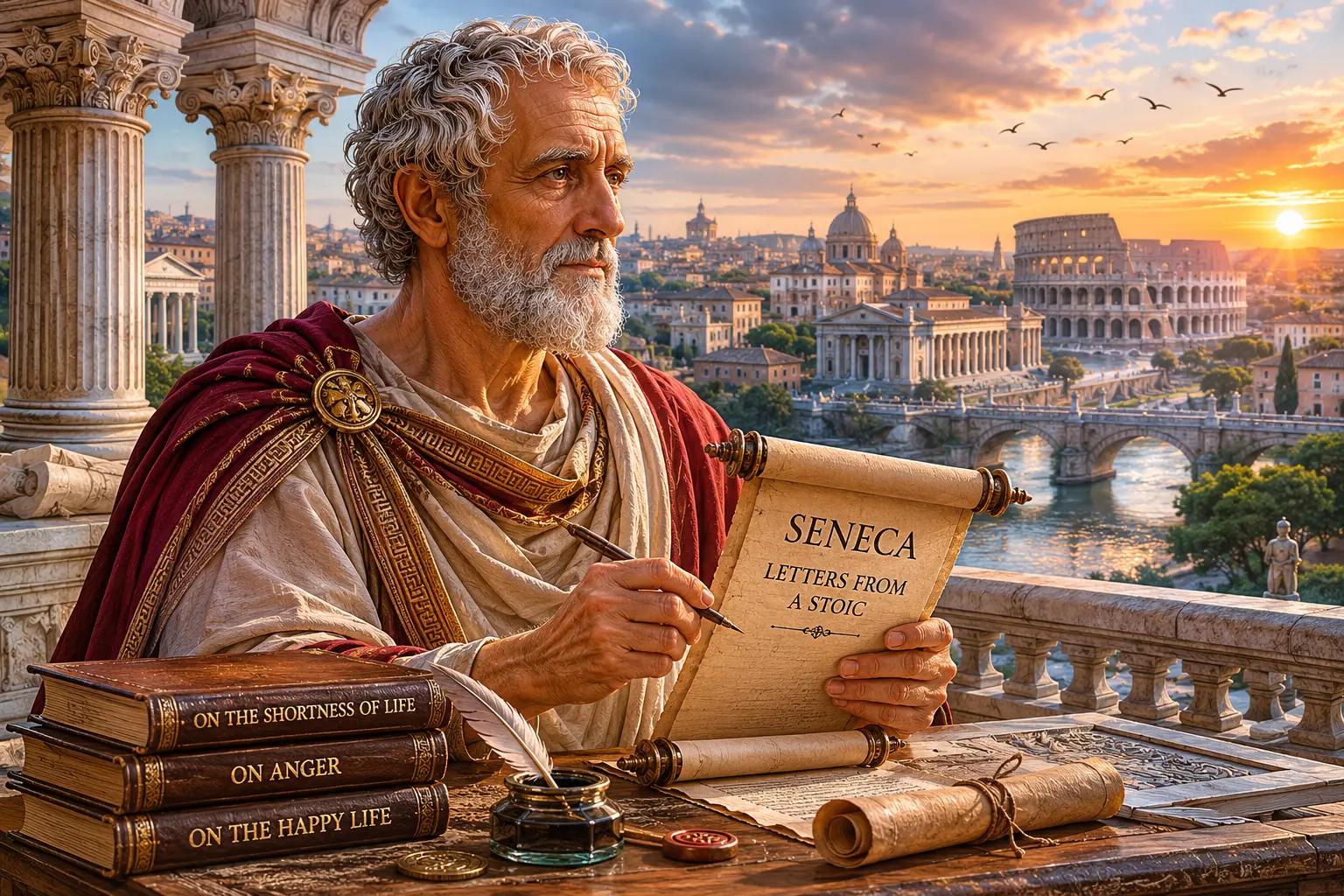
Lucius Annaeus Seneca, often called Seneca the Younger, was a Roman philosopher, statesman, playwright, and writer. He was born around 4 BCE in Corduba, modern-day Spain, and later moved to Rome for his education.
His father, Seneca the Elder, was a respected writer and teacher. This environment gave him access to some of the best education available in the Roman Empire.
As a young man, Seneca studied rhetoric, politics, and philosophy. These subjects would later help him become one of Rome’s most famous intellectuals.
Although he is best known for Stoicism, he was open to learning from different schools of thought. This willingness to explore ideas made his writings more practical and relatable.
Early Life and Education of Seneca
Growing up in a wealthy and educated family gave Seneca many opportunities. He spent much of his youth studying under respected philosophers and teachers.
During this period, he became interested in questions that still matter today:
- What makes a good life?
- How should people handle suffering?
- What is true happiness?
- Why do people fear death?
These questions shaped the rest of his life and became central themes in his writings.
His education focused not only on knowledge but also on character. This emphasis on personal improvement became a cornerstone of his philosophy.
Seneca’s Role in the Roman Empire
Seneca was more than a philosopher. He was also deeply involved in politics.
He held several important government positions and became a respected public speaker. His influence grew quickly, but political life in ancient Rome was dangerous.
Power struggles were common, and many leaders viewed successful politicians as threats.
Despite these risks, Seneca built a reputation as an intelligent adviser and skilled administrator. His political career allowed him to see both the strengths and weaknesses of human nature firsthand.
These experiences later influenced many of his philosophical writings.
Seneca and Emperor Nero
One of the most debated chapters of Seneca’s life involves the Roman emperor Nero.
After years of exile, Seneca returned to Rome and became Nero’s tutor and adviser. At first, many believed he would help guide the young ruler toward wisdom and moderation.
Unfortunately, Nero eventually became one of the most infamous emperors in Roman history.
This connection has led many critics to question Seneca’s character. Some argue that a philosopher who taught virtue should not have remained close to such a ruler.
Others believe he stayed because he hoped to reduce Nero’s harmful actions and protect the empire from worse outcomes.
Regardless of which view is correct, the relationship remains one of the most fascinating aspects of his life.
Why Is Seneca Considered Controversial?
Few philosophers have generated as much debate as Seneca.
One reason is his wealth. Historical records suggest he became extremely rich while teaching a philosophy that encouraged moderation and detachment from material possessions.
Critics accused him of hypocrisy.
However, Seneca argued that wealth itself is not the problem. According to Stoicism, money is neither good nor bad. What matters is how a person uses it.
He believed people should control wealth rather than allow wealth to control them.
Another controversy involved his connection to Nero. While some view him as a hypocrite, others see him as a flawed but sincere thinker trying to apply philosophy in difficult circumstances.
This complexity makes Seneca more human and perhaps more relatable.
Seneca’s Core Stoic Philosophy
The heart of Seneca’s legacy lies in his teachings.
His philosophy focused on developing character and maintaining inner peace regardless of external events.
Virtue Over Wealth
Seneca believed that virtue is the highest good.
Money, fame, and status can disappear at any moment. Character remains.
According to his teachings, a person should focus on becoming wise, honest, courageous, and self-disciplined.
These qualities create lasting happiness.
Mastering Emotions
Many people misunderstand Stoicism as a philosophy that rejects emotions.
Seneca taught something different.
He believed people should understand and manage their emotions instead of being controlled by them.
Anger, fear, and jealousy often lead to poor decisions. Wisdom helps people respond thoughtfully rather than react impulsively.
Accepting Fate
Life does not always go according to plan.
Seneca encouraged people to accept events they cannot control while focusing their energy on actions they can control.
This mindset reduces frustration and builds resilience.
The Value of Time
One of Seneca’s most famous teachings concerns time.
He argued that people waste their most valuable resource without realizing it.
Instead of spending life chasing distractions, he encouraged people to use their time wisely and intentionally.
His message remains powerful in today’s fast-paced world.
Most Important Lessons From Seneca
The wisdom of Seneca continues to inspire readers because it addresses real-life challenges.
Focus on What Matters
Many people spend years pursuing goals that bring little satisfaction.
Seneca advised focusing on meaningful activities and relationships instead of chasing endless approval from others.
Prepare for Difficult Times
He believed challenges are inevitable.
Rather than fearing problems, people should prepare for them mentally. This preparation makes setbacks easier to handle.
Practice Self-Reflection
Regular self-examination was an important part of his philosophy.
By reviewing actions and decisions honestly, people can learn from mistakes and continue growing.
Live in the Present
The future is uncertain.
The past cannot be changed.
Seneca encouraged people to appreciate the present moment and make the most of each day.
Best Books Written by Seneca
Several works have survived and remain popular today.
Letters from a Stoic
This collection contains personal letters filled with practical advice.
The topics include friendship, success, fear, grief, and personal development.
Many readers consider it the best introduction to his ideas.
On the Shortness of Life
This work explores how people waste time and fail to appreciate life’s limited nature.
It remains one of the most widely quoted philosophical texts ever written.
On Anger
In this book, Seneca examines the destructive effects of anger and offers strategies for controlling it.
On the Happy Life
This work explores the meaning of happiness and explains why true fulfillment comes from virtue rather than possessions.
Seneca’s Most Famous Quotes and Their Meaning
Many of his quotes continue to resonate with modern audiences.
“We are not given a short life but we make it short.”
This quote reminds us that poor use of time, not lack of time, is often the real problem.
“Luck is what happens when preparation meets opportunity.”
Success often comes to those who consistently prepare themselves.
“We suffer more in imagination than in reality.”
Fear frequently causes more pain than actual events.
“It is not the man who has too little, but the man who craves more, that is poor.”
True wealth comes from contentment rather than endless accumulation.
Seneca’s Influence on Modern Thinkers
The influence of Seneca extends far beyond ancient Rome.
His writings have inspired philosophers, authors, entrepreneurs, and business leaders for centuries.
Modern thinkers often reference his teachings on resilience, decision-making, and personal responsibility.
His ideas have become especially popular in discussions about productivity, leadership, mental strength, and self-improvement.
This continued interest demonstrates the timeless nature of his philosophy.
What Can We Learn From Seneca Today?
Modern life presents many of the same challenges people faced thousands of years ago.
Stress, uncertainty, ambition, and disappointment remain part of the human experience.
Seneca offers practical tools for handling these challenges.
His teachings encourage people to:
- Use time wisely.
- Focus on character.
- Accept what cannot be controlled.
- Manage emotions effectively.
- Pursue wisdom instead of status.
These lessons remain relevant regardless of age, profession, or background.
Frequently Asked Questions About Seneca
Who was Seneca?
Seneca was a Roman Stoic philosopher, writer, statesman, and adviser to Emperor Nero.
What is Seneca famous for?
He is famous for his Stoic philosophy, letters, essays, and teachings on time, virtue, and resilience.
Was Seneca wealthy?
Yes. He became one of the wealthiest individuals in the Roman Empire during his lifetime.
What is Seneca’s most famous book?
Many readers consider Letters from a Stoic his most influential work.
Why is Seneca still important today?
His teachings provide practical advice for dealing with stress, uncertainty, emotions, and personal growth.
Conclusion
Seneca remains one of history’s most fascinating philosophers. His life combined success, controversy, power, hardship, and deep reflection.
What makes him unique is not that he lived perfectly. Instead, he continually searched for wisdom while facing the same struggles that challenge people today.
His writings remind us that happiness comes from character, not possessions. They teach us to value time, control our emotions, and focus on what truly matters.
That is why Seneca continues to inspire readers around the world and why his lessons remain as relevant today as they were in ancient Rome.