Automatic D: Complete Guide to Automatic Car Gears, Driving Tips & Meanings
If you are new to driving, understanding automatic d and other gear positions can feel confusing at first. Many drivers switch from manual cars to automatic vehicles and wonder what the letters on the gear selector mean. The good news is that automatic cars are designed to make driving easier, smoother, and more comfortable. Once you learn the purpose of each gear and how the transmission works, driving becomes simple and stress-free.
This guide explains everything you need to know about automatic transmissions, gear positions, driving techniques, safety tips, and common mistakes. Whether you are a beginner or want to improve your knowledge, this article will help you drive confidently.
What Is an Automatic Car?
An automatic car uses a self-shifting transmission that changes gears automatically, eliminating the need for a clutch pedal and making driving easier for beginners. Unlike a manual transmission, where the driver must select gears manually, an automatic transmission uses advanced systems to choose the best gear based on speed, engine load, and driving conditions.
Most automatic vehicles have only two pedals:
- Accelerator pedal
- Brake pedal
This simple setup makes driving easier, especially in city traffic and long-distance travel.
How Does an Automatic Transmission Work?
An automatic transmission uses sensors, hydraulic systems, and electronic controls to shift gears automatically. The system constantly monitors vehicle speed and engine performance.
When you accelerate, the transmission selects higher gears as needed. When you slow down, it shifts to lower gears automatically.
The main goal is to provide:
- Smooth acceleration
- Better comfort
- Reduced driver effort
- Improved driving convenience
Modern vehicles may use several transmission types, including CVT, DCT, AMT, and torque converter systems.
Understanding Automatic D and Other Gear Symbols
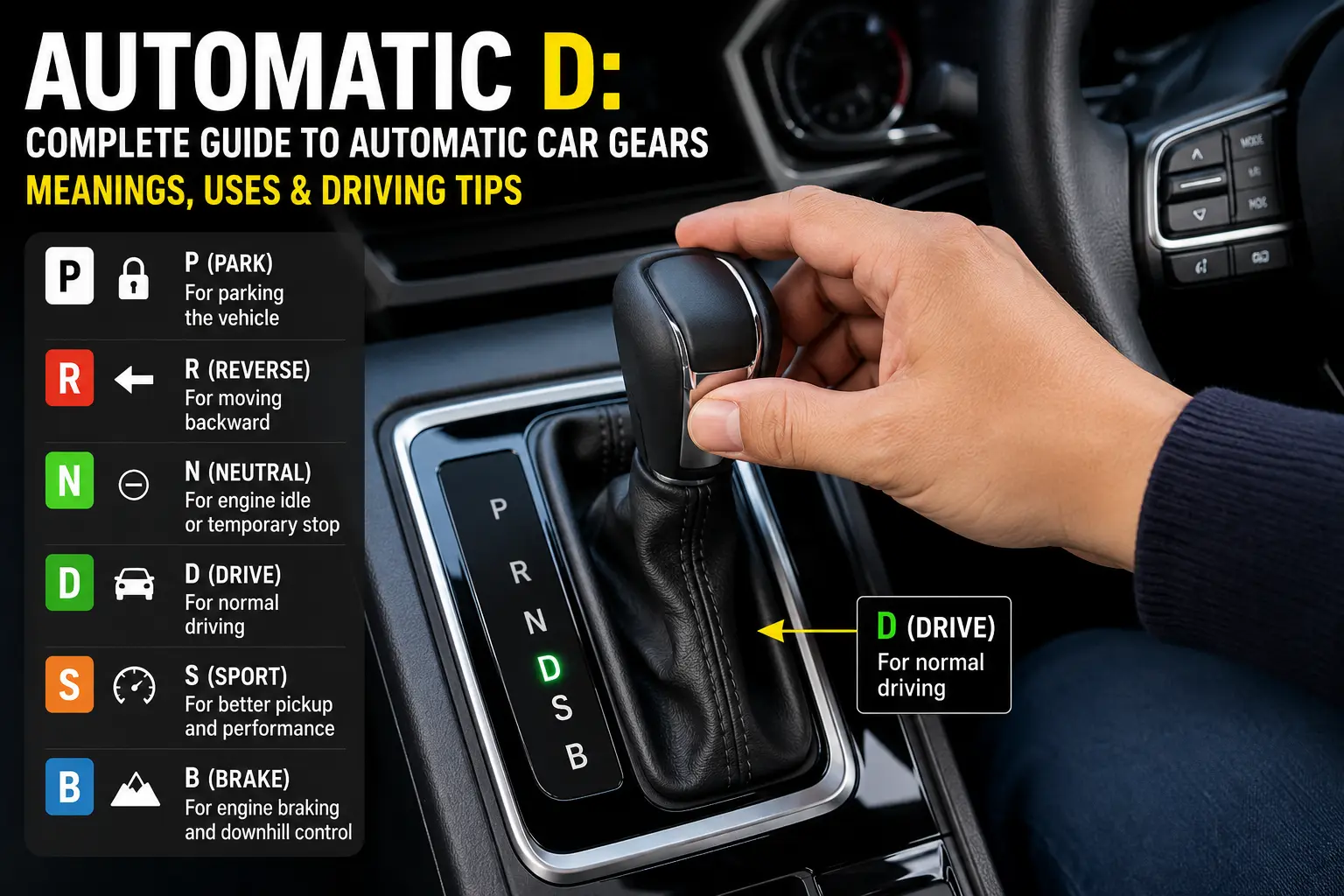
Many drivers see letters on the gear selector but do not fully understand their purpose. Let’s look at each gear position.
P (Park)
Park mode locks the transmission and helps prevent the vehicle from moving.
Use P when:
- Parking the vehicle
- Turning off the engine
- Leaving the car unattended
Always apply the parking brake for extra safety.
R (Reverse)
Reverse gear allows the vehicle to move backward.
Use R when:
- Backing out of a parking space
- Reversing into a driveway
- Performing parking maneuvers
Always bring the vehicle to a complete stop before selecting Reverse.
N (Neutral)
Neutral disconnects the engine from the drive wheels.
Use N when:
- Going through some car washes
- Towing situations where recommended
- Certain maintenance procedures
Many drivers mistakenly shift into Neutral at traffic lights. In most situations, keeping the car in Drive while holding the brake is perfectly fine.
D (Drive)
The most important gear position is automatic d. This mode allows the transmission to shift through all forward gears automatically.
Use Drive when:
- Driving in normal conditions
- City commuting
- Highway travel
- Everyday transportation
Once the gear selector is placed in D, the vehicle handles gear changes automatically.
S (Sport)
Sport mode improves acceleration and performance.
When activated:
- The engine operates at higher RPMs
- Gear shifts occur later
- Throttle response becomes more aggressive
Sport mode is useful when:
- Overtaking vehicles
- Driving on winding roads
- Enjoying a more responsive driving experience
B (Brake) or L (Low)
Some vehicles feature B or L mode.
This setting provides engine braking and helps control speed during downhill driving.
Benefits include:
- Reduced brake wear
- Better control on steep slopes
- Improved safety on mountain roads
When Should You Use Each Gear?
Knowing the purpose of each gear is helpful, but understanding when to use them is even more important.
| Gear | Purpose |
|---|---|
| P | Parking the vehicle |
| R | Moving backward |
| N | Temporary disengagement of drive |
| D | Normal driving |
| S | Sporty driving and overtaking |
| B/L | Uphill and downhill control |
Using the correct gear improves safety and helps protect your transmission.
Step-by-Step Guide to Driving an Automatic Car
Driving an automatic vehicle is easy once you understand the basic process.
Step 1: Start the Vehicle
Press the brake pedal and start the engine.
Most automatic vehicles require the brake pedal to be pressed before starting.
Step 2: Select Drive
Move the gear selector to D.
This engages forward movement.
Step 3: Release the Brake
Slowly release the brake pedal.
Many automatic vehicles begin moving gradually without touching the accelerator.
Step 4: Accelerate Smoothly
Apply gentle pressure to the accelerator pedal.
The transmission automatically selects the correct gear.
Step 5: Slow Down
Remove pressure from the accelerator and apply the brake as needed.
The transmission automatically downshifts.
Step 6: Park the Vehicle
When finished driving:
- Stop completely.
- Shift into Park.
- Apply the parking brake.
- Turn off the engine.
Following these steps ensures safe operation.
Common Mistakes New Drivers Make
Many beginners make avoidable mistakes when learning automatic driving.
Using Both Feet
Use only your right foot for both braking and acceleration.
Using both feet can cause sudden braking and unsafe driving situations.
Shifting While Moving
Never shift from Drive to Reverse or Park while the vehicle is moving.
Doing so can damage transmission components.
Riding the Brake
Keeping constant pressure on the brake pedal increases wear and reduces efficiency.
Forgetting the Parking Brake
Even in Park mode, using the parking brake provides additional security.
Misunderstanding Automatic D
Some drivers think automatic d should only be used at high speeds. This is incorrect. Drive mode is designed for normal everyday driving in almost all situations.
Driving an Automatic Car Uphill and Downhill
Driving on hills requires extra attention.
Uphill Driving
When climbing steep roads:
- Maintain steady throttle input
- Allow the transmission to select gears automatically
- Use B or L mode if recommended by the manufacturer
Downhill Driving
During long descents:
- Use engine braking when available
- Shift to B or L mode
- Avoid excessive brake use
This helps prevent brake overheating and improves vehicle control.
Different Types of Automatic Transmissions
Not all automatic transmissions operate the same way.
CVT (Continuously Variable Transmission)
CVT systems use pulleys and belts rather than traditional gears.
Benefits include:
- Smooth operation
- Better fuel economy
- Improved efficiency
Torque Converter Automatic
This is one of the most common transmission types.
Advantages include:
- Smooth gear changes
- Durability
- Comfortable driving experience
Dual-Clutch Transmission (DCT)
DCT systems use two clutches for faster gear changes.
Benefits include:
- Quick shifting
- Improved performance
- Enhanced fuel efficiency
Automated Manual Transmission (AMT)
AMT systems automate clutch operation while using manual gearbox components.
Advantages include:
- Lower cost
- Better fuel economy
- Simpler design
Automatic vs Manual Cars
Many people wonder whether automatic or manual vehicles are better.
Automatic Cars
Advantages:
- Easier to drive
- Better in traffic
- Reduced driver fatigue
- Convenient for beginners
Manual Cars
Advantages:
- Greater driver control
- Often lower purchase price
- Traditional driving experience
For most new drivers, automatic vehicles provide a more comfortable learning experience.
Advantages of Automatic Cars
Automatic vehicles continue gaining popularity worldwide.
Major benefits include:
Easier Learning Curve
New drivers can focus on steering, braking, and road awareness rather than gear changes.
Better Traffic Performance
Stop-and-go traffic becomes less stressful.
Reduced Fatigue
Long trips are more comfortable because there is no clutch operation.
Smooth Operation
Automatic transmissions provide consistent and seamless gear changes.
Improved Accessibility
Many drivers find automatic vehicles easier to operate due to physical limitations or personal preference.
Automatic Transmission Maintenance Tips
Proper maintenance helps extend transmission life.
Check Transmission Fluid
Transmission fluid plays a critical role in lubrication and cooling.
Follow the manufacturer’s maintenance schedule.
Avoid Aggressive Driving
Sudden acceleration and hard braking can increase wear.
Service the Vehicle Regularly
Routine inspections help identify problems before they become expensive repairs.
Use the Correct Fluid
Always use manufacturer-approved transmission fluid.
Using the wrong type can lead to performance issues.
Signs Your Automatic Transmission Needs Repair
Recognizing early warning signs can prevent major failures.
Watch for:
Delayed Gear Changes
Slow shifting may indicate transmission issues.
Slipping Gears
The vehicle may unexpectedly change gears or lose power.
Burning Smell
Overheated transmission fluid often produces a burning odor.
Fluid Leaks
Transmission fluid leaks should be addressed immediately.
Warning Lights
Dashboard warning lights may indicate transmission problems.
If any of these symptoms appear, consult a qualified technician.
Frequently Asked Questions
Is automatic D the same in every car?
The basic function is generally the same. However, manufacturers may offer additional modes and features.
Can I shift to Neutral while driving?
It is usually unnecessary and provides no fuel-saving benefit in modern vehicles.
Is an automatic car easier than a manual?
Yes. Most drivers find automatic vehicles easier to learn and operate.
What does B mode mean?
B mode typically stands for Brake mode or engine braking mode, helping control speed on steep descents.
Can automatic cars roll backward on hills?
Some vehicles may roll slightly. Modern systems often include hill-start assistance to reduce rollback.
Does Sport mode improve speed?
Sport mode improves responsiveness and acceleration but may reduce fuel economy.
Conclusion
Understanding automatic d and other gear positions is essential for safe and confident driving. Automatic vehicles simplify the driving experience by handling gear changes automatically, allowing drivers to focus on the road. By learning the purpose of P, R, N, D, S, and B modes, following proper driving techniques, and maintaining your transmission correctly, you can enjoy smoother, safer, and more efficient journeys. Whether you are a first-time driver or transitioning from a manual vehicle, mastering automatic transmission basics will make every trip easier and more enjoyable.