
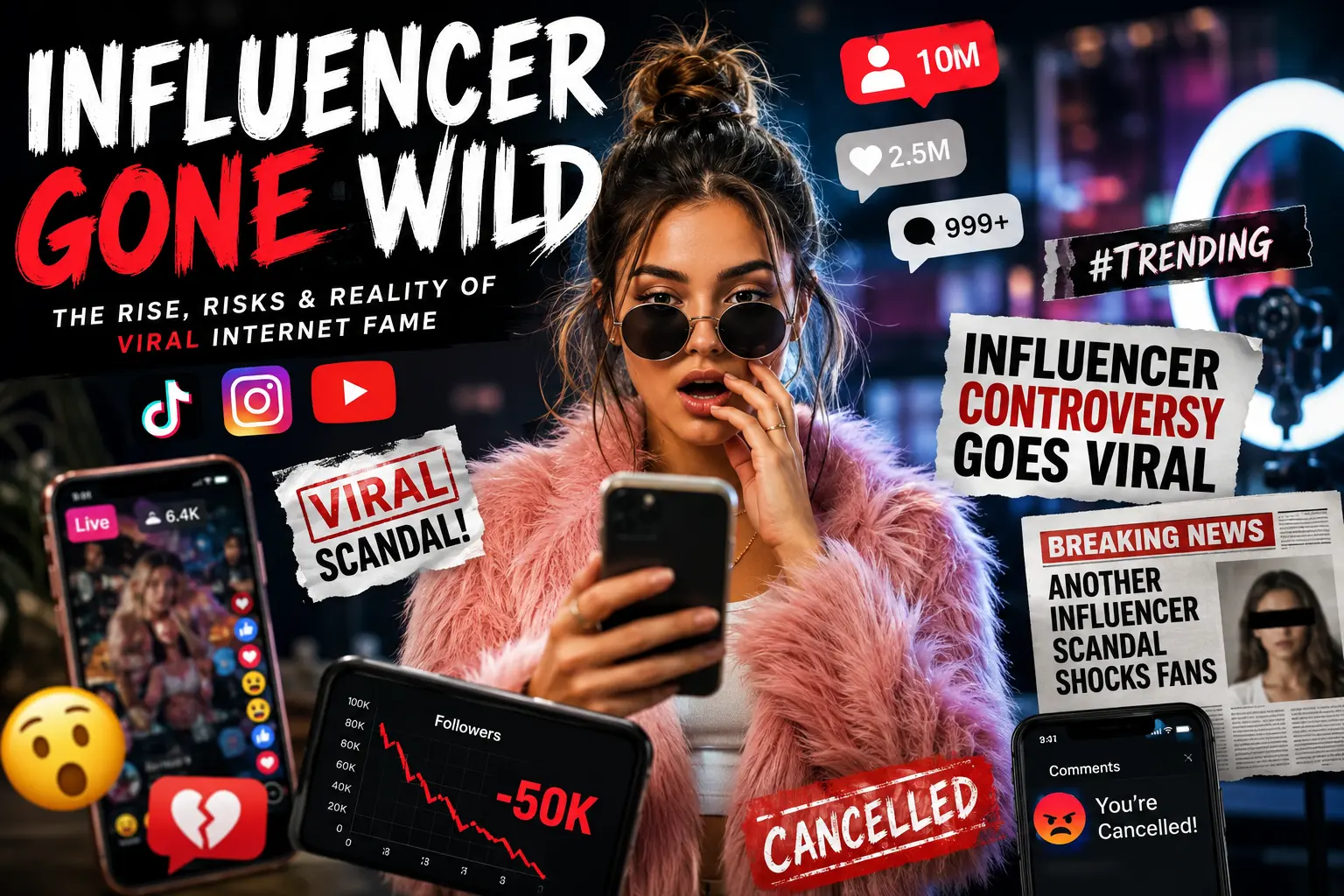
Influencer Gone Wild: The Rise, Risks, and Reality of Viral Internet Fame
The phrase influencer gone wild has become one of the most talked-about topics in social media culture. Every day, millions of people watch creators on TikTok, Instagram, YouTube, and other platforms. While many influencers build positive communities, some gain attention through controversial actions, public meltdowns, risky challenges, or viral scandals.
In today’s creator economy, going viral can bring fame, money, and brand deals overnight. However, it can also create pressure, criticism, and lasting damage to a person’s reputation. As social media continues to evolve, understanding the reality behind the influencer lifestyle is more important than ever.
This article explores the rise of influencer culture, why controversies happen, and what these viral moments mean for creators, brands, and audiences.
What Does Influencer Gone Wild Mean?
The term influencer gone wild describes situations where social media influencers engage in unexpected, controversial, or extreme behavior that attracts widespread attention.
These incidents may include:
- Public arguments or meltdowns
- Dangerous social media challenges
- Offensive comments or content
- Fake giveaways and scams
- Conflicts with followers
- Brand partnership controversies
Sometimes these moments happen accidentally. Other times, influencers intentionally create drama to increase engagement and reach larger audiences.
Because social media rewards attention, even negative publicity can generate millions of views within hours.
Why Is Influencer Gone Wild Trending?
The popularity of this topic reflects how social media has changed entertainment and celebrity culture.
Years ago, celebrities were mainly actors, musicians, and athletes. Today, anyone with a smartphone and internet connection can become famous.
Several factors contribute to the trend:
Instant Virality
Platforms like TikTok and Instagram allow content to spread quickly. A single video can reach millions of people within a day.
Audience Curiosity
People naturally pay attention to controversy. Dramatic stories often receive more clicks than ordinary content.
Competition for Attention
Influencers compete against millions of creators. Some take bigger risks to stand out from the crowd.
Algorithm Rewards
Social media algorithms often prioritize content that generates strong reactions, whether positive or negative.
How Social Media Created Modern Influencer Culture
Social media transformed ordinary people into digital celebrities.
Platforms such as TikTok, Instagram, YouTube, and Snapchat allow creators to build personal brands without traditional media companies. As audiences grew, influencer marketing became a multi-billion-dollar industry.
Today, influencers promote:
- Fashion products
- Beauty brands
- Technology gadgets
- Fitness programs
- Travel experiences
- Financial services
Many creators earn income through sponsorships, affiliate marketing, advertising revenue, and product sales.
This opportunity has created a new generation of entrepreneurs. However, it has also increased pressure to stay relevant online.
How Influencers Go Viral Overnight
Viral success often appears sudden, but several factors usually contribute to it.
Unique Content
Creative ideas help influencers stand out from competitors.
Emotional Reactions
Content that makes people laugh, cry, or feel surprised tends to perform better.
Timing
Posting content at the right moment can significantly increase visibility.
Shareability
Videos that encourage viewers to share them with friends often spread rapidly.
While virality can be exciting, it also creates challenges. Some creators struggle to handle sudden fame and public scrutiny.
Common Types of Influencer Controversies
Not every controversy is the same. Several patterns appear repeatedly across social media platforms.
Public Meltdowns
Some influencers share emotional reactions during stressful situations. While authenticity can strengthen audience connections, public breakdowns sometimes attract criticism.
Dangerous Challenges
Certain creators participate in risky activities to gain views. These challenges may encourage unsafe behavior among followers.
Fake Giveaways
Promising prizes that never materialize damages trust and can lead to serious reputation problems.
Offensive Content
Insensitive jokes, inappropriate comments, or controversial opinions can trigger significant backlash.
Brand and Sponsorship Scandals
Influencers sometimes promote products without proper research. When products fail or customers feel misled, both the influencer and the brand face criticism.
Famous Examples of Influencer Gone Wild Moments
Throughout social media history, several incidents have demonstrated how quickly online fame can change.
Creators have faced backlash for:
- Posting offensive content
- Participating in dangerous stunts
- Misleading followers
- Violating platform guidelines
- Creating fake lifestyle content
These situations often generate millions of views and extensive media coverage.
In many cases, influencers lose sponsorships, followers, and credibility. Some successfully rebuild their brands, while others disappear from the public spotlight.
How Algorithms Reward Controversial Content
One reason the influencer gone wild phenomenon continues is that social media algorithms often prioritize engagement.
Algorithms measure:
- Comments
- Shares
- Likes
- Watch time
- User interactions
Controversial content frequently generates strong reactions. People argue in comments, share opinions, and create response videos.
As engagement increases, platforms may show the content to even more users.
This creates a cycle where attention becomes more valuable than quality.
The Mental Health Impact on Influencers
Being an influencer may appear glamorous, but many creators face significant mental health challenges.
Constant Pressure
Influencers often feel pressure to post content daily.
Fear of Losing Relevance
Social media trends change rapidly. Creators worry about losing followers if they stop producing content.
Online Criticism
Negative comments and public criticism can affect confidence and emotional well-being.
Burnout
Managing content creation, brand partnerships, and audience expectations can become overwhelming.
Many influencers now speak openly about anxiety, stress, and burnout. These discussions have increased awareness about the hidden challenges of digital fame.
How Viral Scandals Affect Followers
Influencer controversies do not only affect creators.
Followers, especially younger audiences, may also experience consequences.
Many fans develop strong emotional connections with influencers. When scandals occur, followers can feel disappointed or betrayed.
This highlights the importance of media literacy and critical thinking.
Audiences should remember that social media often shows only a small portion of someone’s life.
Can Influencers Recover After a Public Controversy?
Recovery is possible, but it depends on several factors.
Influencers who successfully rebuild their reputation often:
- Take responsibility for mistakes
- Apologize sincerely
- Demonstrate positive changes
- Remain transparent with audiences
- Avoid repeating harmful behavior
Trust takes time to rebuild.
Some creators recover stronger than before because they learn from their mistakes. Others struggle to regain audience confidence.
The Business Side of Going Viral
Attention has significant value in the creator economy.
Higher engagement can lead to:
- More sponsorship opportunities
- Increased advertising revenue
- Product sales
- Membership subscriptions
- Media appearances
This financial incentive sometimes encourages creators to push boundaries.
However, short-term attention does not always lead to long-term success.
The most successful influencers focus on building trust, credibility, and lasting relationships with their audience.
How Brands Respond to Influencer Scandals
Brands carefully monitor the behavior of influencers they partner with.
When controversies occur, companies may:
- Pause campaigns
- End sponsorship agreements
- Release public statements
- Conduct internal reviews
Businesses want to protect their reputation and maintain customer trust.
As a result, many brands now evaluate influencers based on both audience size and professional conduct.
Authenticity, transparency, and ethical behavior have become increasingly important factors in influencer marketing.
The Future of Influencer Culture
Influencer culture continues to evolve.
Several trends are shaping the future:
Greater Transparency
Audiences increasingly value honesty over perfection.
Stronger Platform Rules
Social media companies continue updating policies to reduce harmful content.
Long-Term Brand Building
Creators are focusing more on sustainable businesses rather than short-term viral moments.
Community-Driven Content
Many influencers are prioritizing meaningful engagement instead of chasing views.
The future belongs to creators who balance authenticity with responsibility.
Frequently Asked Questions
What does influencer gone wild mean?
It refers to situations where influencers engage in controversial, extreme, or unexpected behavior that attracts public attention.
Why do influencers create controversial content?
Some creators seek higher engagement, while others make mistakes under the pressure of maintaining relevance.
Can influencer scandals damage careers?
Yes. Scandals can result in lost sponsorships, declining followers, and reputation damage.
How do social media algorithms influence behavior?
Algorithms often reward engagement, which may encourage creators to produce attention-grabbing content.
Are all influencer controversies intentional?
No. Some controversies result from misunderstandings, poor decisions, or unexpected situations.
Conclusion
The world of influencer gone wild reflects both the opportunities and challenges of modern digital culture. Social media has created new pathways to fame, allowing ordinary people to build powerful personal brands and global audiences.
At the same time, the pursuit of attention can encourage risky behavior, controversy, and unhealthy pressure. Viral moments may generate short-term success, but lasting influence comes from authenticity, trust, and meaningful connections.
As influencer culture continues to grow, creators, brands, and audiences must work together to promote responsible content and healthier online communities. The most successful influencers will not be those who create the biggest scandals, but those who provide genuine value while maintaining credibility and integrity.